2023 - 2025
Nieuwe Weelde Hoorn
2023 - 2025
Nieuwe Weelde Hoorn
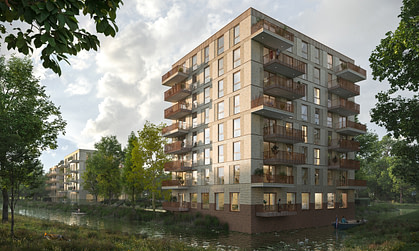
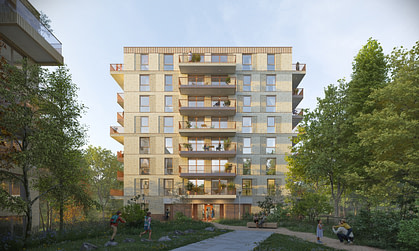
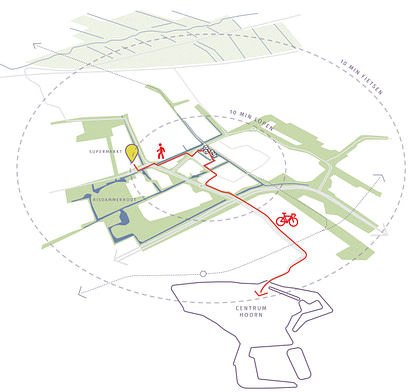
Located just north of Hoorn’s city center, Nieuwe Weelde transforms former hockey fields within the Nieuwe Steen district into a green, human-scale neighborhood. The development introduces sixty affordable senior homes in a park-like setting.
Location
Hoorn
Client
VORM
Year
2023 - 2025 (Design)
2026 - 2028 (Execution)
Collaboration
Studio Pallesh
Surface Area
5800 m2
The team of VORM, Studio Pallesh and Bureau B+B won the competition to design blocks OH1 and OH2 and the surrounding public realm. The plan is structured around a strong diagonal connection that runs between the residential buildings, creating clarity and spatial cohesion across the site. Parking is resolved in a semi-sunken structure with subtly rising ground levels, allowing the landscape to remain continuous and pedestrian-focused. A collective rooftop space above the parking deck offers residents an additional communal garden and meeting place.
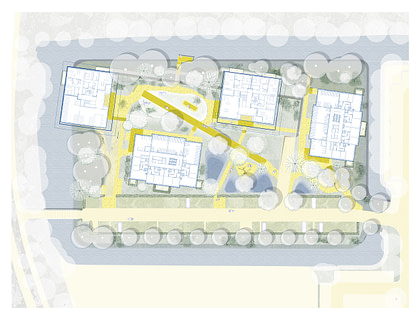
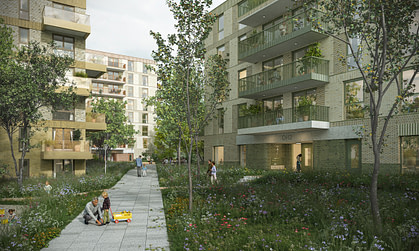
Designed specifically for seniors, the apartments combine affordability with spatial quality and accessibility. The landscape plays a central role in supporting social interaction and daily movement. Meeting places are carefully distributed across the site, with seating along pathways and entrance zones providing comfortable resting points. At the heart of the plan, a long neighborhood table on the parking deck acts as a social anchor, connected to a generous communal lawn. Together with the rooftop garden, these spaces stimulate encounter and strengthen community life.
The existing green structure — mature trees, waterways and open fields — forms the foundation of the design. The semi-sunken parking structure is fully integrated into the landscape. A diagonal dike-boulevard conceals the volume, transforming infrastructure into a subtle rise in the terrain.
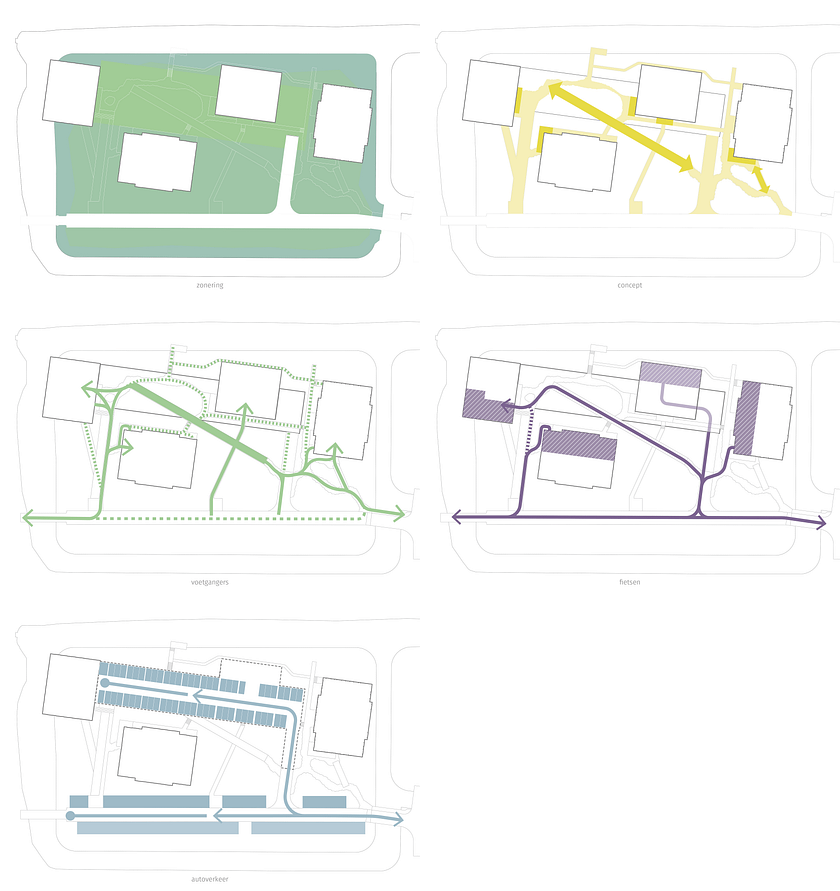
Ecology is embedded at multiple scales. Existing trees are preserved wherever possible and complemented by new trees and extensive shrub planting. The landscape is designed to support bats, birds, amphibians, bees and butterflies, offering opportunities for roosting, nesting and foraging. Wadis for rainwater retention double as biodiverse habitats and informal play spaces, while phased and adaptive mowing strategies enhance long-term ecological resilience.
The path network gradually descends toward the waterfront, where a robust pier extends into the natural shoreline. Here, residents and visitors can enjoy the water, reinforcing the connection between neighborhood and landscape.