2021 - 2025
Kern Haamstede
2021 - 2025
Kern Haamstede
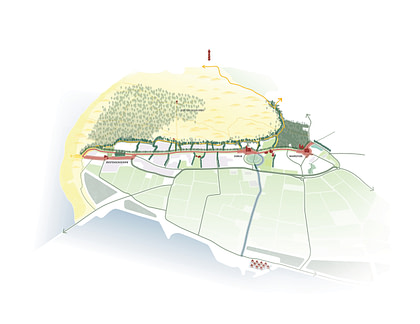
Kern Haamstede is a key project within the broader vision for Park Burgh-Haamstede. As the first village in the ribbon, it serves as the gateway to the village axis.
Location
Burgh-Haamstede
Client
Gemeente Schouwen-Duiveland
Collaboration
Juust mobiliteit,
uitvoering: Van Gelder, Gruppen fonteintechniek
Surface Area
1.5 ha
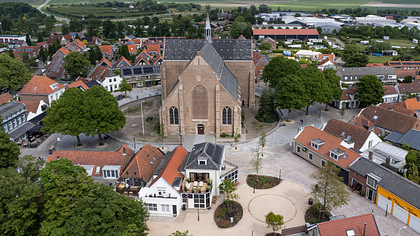
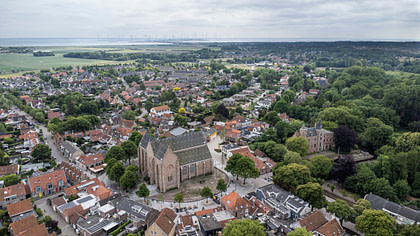
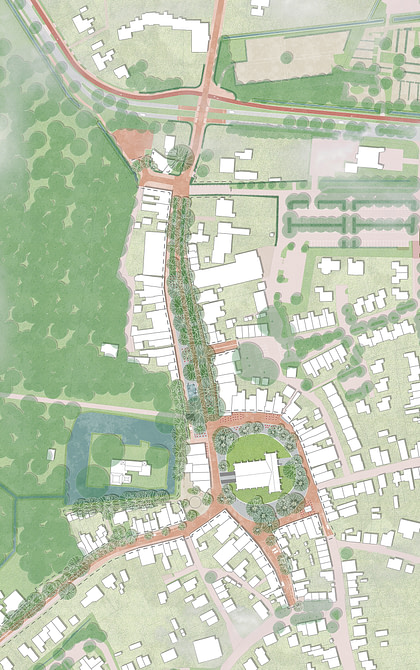
As a historic ring village at the edge of the woods and polders of the Kop van Schouwen, and in close proximity to the castle, the centre of Haamstede holds exceptional spatial qualities. The ambition of the project is rooted in this unique setting. The redesign aims to strengthen Burgh-Haamstede’s livability and spatial identity by reinforcing the relationship between village structure, landscape and heritage.
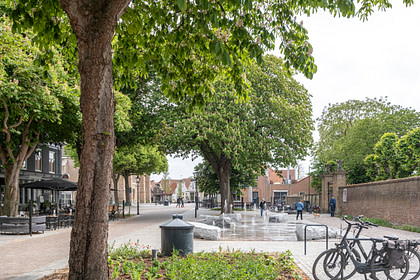
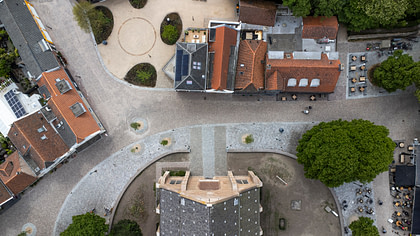
The project area comprises Noordstraat, the Ring and part of Weststraat – together forming the historic heart of Haamstede. Over time, these spaces became dominated by car traffic and parking. The proposal restores balance by prioritizing pedestrians, cyclists and public life. A seasonal car-free regime and a simplified traffic structure reduce pressure on the center, while parking is relocated to the village edges within comfortable walking distance. This reorganization creates a calm, legible and pedestrian-oriented core.
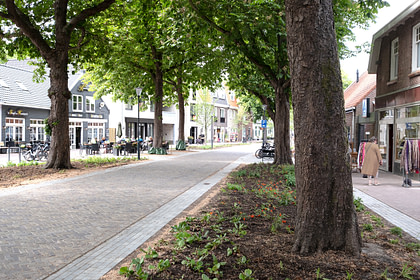
Noordstraat
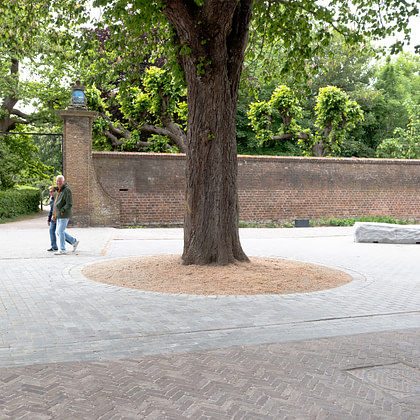
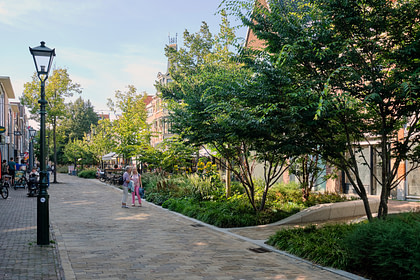
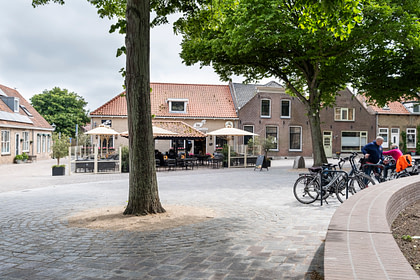
Noordstraat transforms into Haamstede’s promenade. The existing tree avenue – a defining spatial element – is preserved and strengthened. Generous planting beds beneath the trees improve growing conditions and introduce a lush, shade-tolerant planting palette with a predominantly green character. Two broad walking zones frame a central strip primarily used by cyclists. These flanking zones accommodate terraces, seating and planting in a clear and coherent arrangement, inspired by the historic street profile.
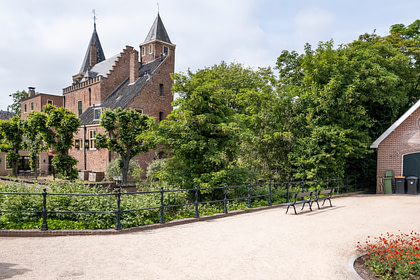
The Ring
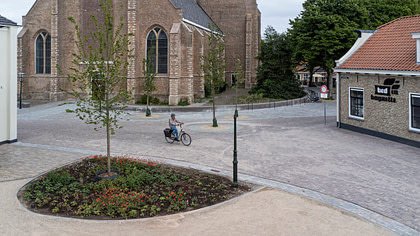
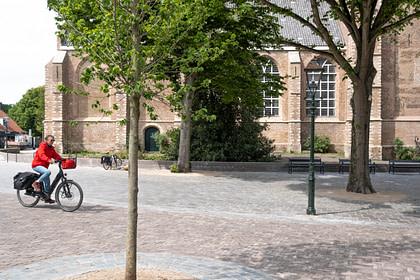
The Ring evolves into a green and cohesive village square. The removal of traffic lanes and parking restores its historic character as a place of encounter. A continuous pavement of natural stone gives the square a calm and informal atmosphere. At its center, the church garden is more fully integrated into the public realm. The existing wall is replaced by a new circular brick wall, lowered to seating height, forming a continuous edge that both protects the garden and invites use. Terraces are carefully positioned around the square for optimal sunlight while maintaining clear pedestrian flows.
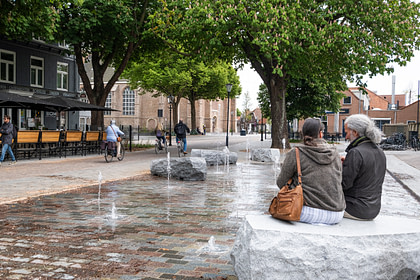
Landscape as identity
Landscape structure and planting play a leading role in the project. Public planting areas are significantly expanded, strengthening spatial cohesion and climate resilience. The church garden is enriched with abundant perennial planting, enhancing its presence within the square. Throughout the project, sustainability, material reuse and a careful dialogue between heritage and contemporary use form the foundation of the design approach.